
Marvel Wins The Movie War...For Now
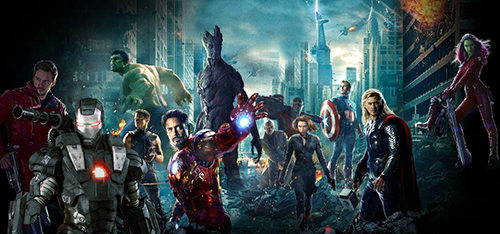
Sorry DC Comics fans, but with the runaway success of the recently released Guardians Of The Galaxy film and the announcement that the upcoming film Batman v. Superman: Dawn Of Justice won't directly compete with the third Captain America film, it's pretty clear that Marvel Entertainment has won the Comic Book Movie War over its rival DC Entertainment.
DC's Early Success
For years DC was at the apex of comic book-based films thanks to Superman then Batman dominating the box office. Marvel wasn't even a contender; it was consigned to bargain-basement shlock efforts like Captain America, The Punisher and Roger Corman's The Fantastic Four, which wasn't even released. It seemed like Marvel just couldn't get its act together and was floundering with its attempts to put something out into theaters much less TV. Meanwhile, DC had solid hits with its flagship heroes and films that although were flawed, were generally well received.
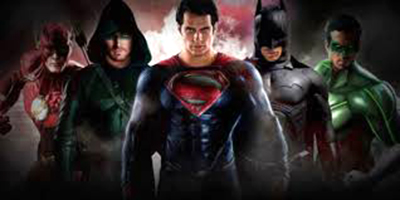 DC's advantage was that it was (and is still) owned by the studio giant Warner Bros., which had the deep pockets to finance the superhero films. This was why the Superman and Batman films looked so good. In their day, they had big budgets with big-name stars, directors and the best special effects and production people working hard to put out quality efforts. The best Marvel could muster was getting Dolph Lundgren to star as the Punisher.
Double-Sided Victory
Despite their overall success, DC still had some chinks in their movie armor. For every rousing Superman II or Batman there were undeniable stinkers like Superman III or Batman & Robin. Worse were truly abysmal films like Steel and The Return Of Swamp Thing that not only failed in the box office, but sullied the reputation of superhero films.
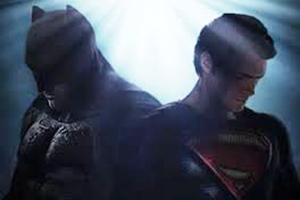 DC Entertainment didn't fully capitalize on the success of the Batman and Superman films. Yes, they did push forward TV adaptations of the Flash and Superman, but they should've concentrated on making quality films of their other properties. Instead they pooled all their efforts into Batman, which made sense since he's their most popular superhero. But the problem with that approach is that when a Batman film falters it affects the rest of their line. And this is what happened with the release of Batman & Robin in 1997. At the same time, DC was floundering with their attempts to reboot the Superman film franchise. A lull existed for DC superhero films that lasted from 1997 until 2004 when the DOA Catwoman was released. DC wouldn't get back on its feet until the following year when Christopher Nolan's reboot Batman Begins was unleashed.
That film's success did come with a price. Chiefly that Nolan's unique and grounded Batman universe couldn't have any ties to the rest of the DC universe. Hence no mentions of Superman, Wonder Woman, etc. As good as that was for the Batman films, it meant that DC couldn't use them to introduce other heroes. Then everyone knows about Superman Returns and Green Lantern, two highly anticipated films that failed and left DC's expansion efforts stillborn.
Birth Of A Universe
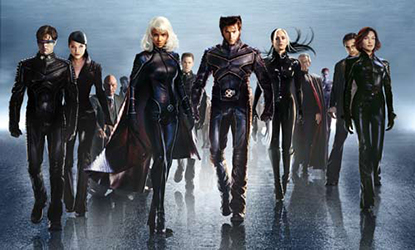 Marvel Studios began its ascension in the early 2000s with the releases of X-Men and Spider-Man. However, Marvel Entertainment didn't own the film rights to those characters, but that would soon change.
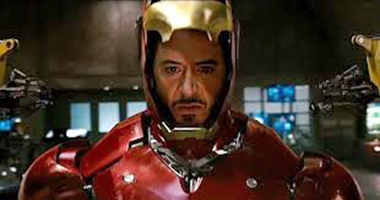
Marvel Studios began to slowly regain the rights to certain characters that were licensed out in the mid-2000s. The first coups were the Hulk and Iron Man, who incidentally kickstarted the Marvel Cinematic Universe in 2008. As DC celebrated the release of the monumental epic The Dark Knight, Marvel had its own bragging rights with Iron Man. What truly sweetened the pie for Marvel fans was the hint of a larger universe in that film. That came with the famous post-credit scene where Tony Stark (Robert Downey, Jr.) learned about the Avengers Initiative. Then, just a few weeks later in the film The Incredible Hulk, Downey, Jr. reprised his role as Stark for a special appearance. Thus, the proper Marvel Cinematic Universe was born in the summer of 2008.
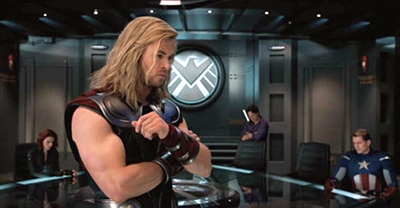 As Marvel Studios sought to bring to life lesser known characters like Iron Fist and Vision, The Walt Disney Company purchased Marvel Entertainment in 2009. Now with deep pockets behind them, Marvel Studios was allowed to reach for higher glory and became more ambitious.
In 2012, The Avengers premiered to an eager world of fans who finally saw their dream of several distinct superheroes together in a live-action medium. To say that The Avengers revolutionized superhero films isn't an exaggeration. It became the third highest grossing film of all time and performed better in theaters than Nolan's conclusion to his Dark Knight Trilogy, The Dark Knight Rises.
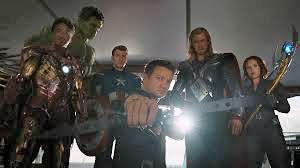 Following The Avengers, Iron Man 3 and Thor: The Dark World performed spectacularly in theaters the following year. Then the world was very shocked at this year's success of Captain America: The Winter Soldier and Guardians Of The Galaxy. The second Captain America film was a tense, exciting and well crafted political thriller, while Guardians Of The Galaxy was an amazing joy ride with colorful and endearing characters. Both films weren't expected to do as well as they did since they featured less-popular and less-known heroes. Thanks to their success should be given to the directors behind the films who had firm grasps on the characters and had the ability to deliver. It's undeniable that Marvel Studios must be acknowledged as being able to churn out exceptional superhero films.
Late Start
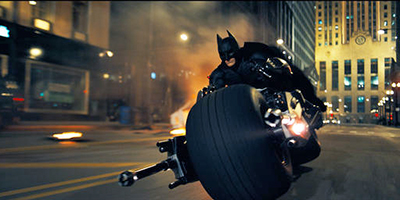 Around the beginning of this decade as Marvel Studios was blossoming what was DC Entertainment doing around this time? We got from them Green Lantern and The Dark Knight Rises. The former film didn't perform to expectations and failed to resonate with fans and audiences. Green Lantern was hamstrung with weak villains, pedestrian storytelling, and for a film featuring a cosmic hero it was too Earthbound. On the other hand, the final film in Christopher Nolan's Dark Knight trilogy was well received at the time of its release, but many grumbled that it was too ponderous, and pretentious.
Does all of this mean that it's over for DC? Should they throw in the towel? Hell, no! They may be way behind Marvel at the moment, but they are gearing up for a new war that will start in March 25, 2016. The release of Batman v. Superman: Dawn Of Justice is just the opening salvo. However, the failures of Green Lantern and The Dark Knight Rises in terms of creating a cinematic universe is why DC had to start over with Man Of Steel in 2013, already a few years behind Marvel Studios.
 Man Of Steel did begin an earnest establishment of a larger universe. Take the scene near the end when Superman (Henry Cavill) and Zod (Michael Shannon) fight above Earth and tear apart a satellite belonging to Wayne Industries. It was a nifty Easter egg, but it was a blink-and-you'll-miss-it moment and the film should've done more. Imagine if a post-credits scene was shown where the near destruction of Metropolis is shown on a TV screen. The camera would've pulled back to show that the TV was in a cave and that Batman could be seen watching the disaster on TV. Or have the TV in a non-descript apartment where a certain green Power Battery could be spotted.
Regardless, Man Of Steel was DC's first true attempt at establishing its own cinematic universe. Its Easter eggs may pale next to Iron Man with the Avengers Initiative scene, but it's a start.
Broad Horizons Ahead For Both Companies
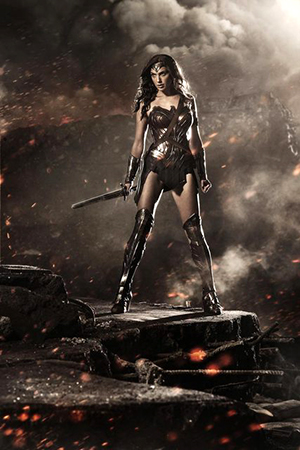
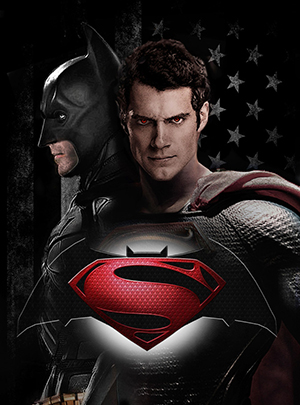 From March 2016 until 2020, DC has eight films scheduled for release. At this point, the general public doesn't know which properties will be on the big screen aside from Batman v. Superman: Dawn Of Justice, but current rumors point to Shazam, Wonder Woman, the Justice League (finally!), a new Batman, and a proper sequel to Man Of Steel. DC and Warner Bros. should be commended for not rushing things unlike some other movie studios with comic book properties (looking at you Sony). This means that when the universe is finally presented it should be cohesive and well done.
With DC beginning its own universe, which at this point is still in planning stages, Marvel is charging forward with more film releases. Next year will see the eagerly anticipated sequel Avengers: Age Of Ultron and Ant-Man. The following year we'll get the aforementioned third Captain America film and on July 28, 2017 the Guardians of the Galaxy will return to theaters with a new film. Additionally, Marvel recently announced several release dates through 2019 for five more films in the MCU. No details have been released but the speculation is that these films may include sequels to Thor, the Avengers, possibly Iron Man (Robert Downey, Jr. recently expressed interest in continuing to play Iron Man), and new properties like Captain Marvel, Black Panther, the Inhumans, or Doctor Strange.
A film based on the last character mentioned, Doctor Strange, also means that Marvel is branching off in yet another direction. Like with Guardians Of The Galaxy, which is actually a space adventure film, a Doctor Strange film would not be a traditional superhero film, but rather one that deals in the genre of horror and fantasy. The fact that Scott Derrickson has been hired to direct the film is indicative of its horror trappings since Derrickson's resume includes horror films.
Marvel's Challenges
Clearly, things look fantastic for Marvel Studios, right? Well, there is the specter of a big flop coming its way. It's bound to happen, it's inevitable. Some say the studio is now overdue for one, which was why so many thought Guardians Of The Galaxy would flop because its concept seemed too bizarre for mainstream audiences.
 With that said, it's incredible how quick fans are dismissing next year's reboot of the Fantastic Four and the announced spinoffs of Spider-Man films. The fact that Spider-Man, the Fantastic Four and the X-Men are properties that don't belong to Marvel Studios is a bothersome idea for many that are convinced that only Marvel Studios alone can produce high-quality superhero films. By the way, it's one clear advantage that DC has since it has control over all of its properties and it's easier for them to create a cinematic universe.
 Ultimately, it may not matter to a lot of people whether or not Marvel Entertainment can keep all of its superheroes under one studio. But for Marvel, there is some cause for concern because they don't have control over all of its properties and it must be rankling. What's more, the improper way these three properties are handled could wind up diluting the Marvel brand. Think of it this way, average moviegoers doesn't know the minutiae of which studio owns what rights. They just see the Marvel logo and assume the film is being done by the same company. So if they see a poorly done Fantastic Four film they may pass on seeing another Marvel superhero film, which could be made by Marvel Studios. It's a guilt by association dilemma. That is why Marvel has been going about buying back the rights of its many characters. The last significant holdouts are the three mentioned properties. But Fox and Sony know they have cash cows in their hands and won't let them go until the films begin flopping. As successful as is the Marvel Cinematic Universe, it feels a bit incomplete. This is something DC doesn't have to worry about.
A True War Is Coming
The current Comic Book Movie War may seem lopsided in Marvel's favor and that is a correct assumption. The Marvel movies, specifically those released by Marvel Studios, have been wildly successful because A) they're well crafted films backed by producers, directors and a film studio that genuinely cared about the finished product and B) Marvel Studios took the extra effort to create an organic cinematic universe that enriched the viewing experience. The bottom line is that while DC dithered until very recently, Marvel films have had a chance to establish themselves so they have the advantage that DC formerly had back in the last century.
But DC realizes to its credit that the paradigm has changed. They are embracing the concept of a shared cinematic universe which began with Man Of Steel and will be fully realized with Batman v. Superman: Dawn Of Justice. With more films following up the epic encounter between the Caped Crusader and the Man of Tomorrow, DC will rightfully be a viable alternative to Marvel. Then the true Movie War will be underway. So who wins? We'll find out in a few short years, although either way, the comic book/superhero fans win.
José Soto and Lewis T. Grove